
General traveller leaflet
When you travel, you can catch nasty and dangerous diseases. For example, diarrhoea,
mosquito-borne diseases, skin problems and rabies (rabies). This leaflet tells you how to
preventing you from getting sick while travelling and what you can do if you do get sick while travelling. Children
are more vulnerable than adults. That is why this leaflet gives additional
advice for children.
Vaccinations and medicines
Vaccinations or taking tablets can help you prevent diseases such as hepatitis and malaria.
Discuss your trip with a knowledgeable traveller's advisor at least four weeks before departure. The
healthcare at your travel destination may not be as good as in the Netherlands. The adviser will keep
take into account your health condition, purpose of travel, duration and itinerary. On the website of the
Landelijk Coördinatiecentrum voor Reizigersadvisering (LCR) lists where you can find a
expert traveller advisers can find.
Hygiene
Wash your hands thoroughly with soap. Always do this after using the toilet and before eating. Wash your
hands as well before cooking. Keep persons suffering from stomach ache and/or diarrhoea out of the kitchen.
Work with well-cleaned kitchen materials and use clean tea, hand and dish towels.
In (sub)tropical countries it is often hot and humid. In this environment, your skin is more sensitive to
inflammations. It is important to clean small wounds as well. This can be done with lukewarm drinking water.
Diseases such as hepatitis B can be transmitted by items with blood (leftovers) on them.
These include getting a piercing or tattoo, sharing razor blades (including at
the hairdresser) or non-sterile medical instruments. For more information on hepatitis B and how to
you can prevent it, see the leaflet ‘Hepatitis B’.
Eating safely
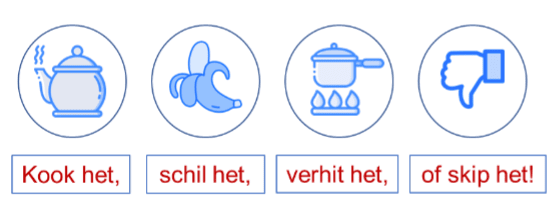
Food (especially raw) is often not safe. Therefore, do not eat raw meat, raw fish or shellfish. This
also applies to raw milk or milk products. Food spoils faster at higher temperatures so make sure
That your food is made fresh. Do not eat raw vegetables or salads, these are often made with tap water
crops. Also, make sure food is heated well to kill germs. Eat fruit only if you
peel or peel it yourself and only eat packaged ice cream.
Safe drinking water
In many countries, water from the tap is not drinking water. If tap water has been used to make
of ice cubes, shaved ice and drinks (such as lemonades or smoothies), you can get sick from them.
You can also get sick from eating raw vegetables or salads washed with
tap water. To minimise the risk of getting sick, it is better to use these products
do not take if you are not sure if safe drinking water has been used. Water from unopened bottles and
boiled tap water is safe to drink.
Water filters and chemicals
Water can be purified with a water filter. Then choose a water filter with very small holes
so that it can stop parasites and bacteria. A water filter cannot stop viruses.
Chemicals such as iodine or chlorine can also be used. These are available in
outdoor sports shops. Iodine and chlorine kill bacteria, viruses and, to a lesser extent, parasites. Caution,
these chemicals are not for everyday use and iodine should not be used in
thyroid problems or pregnancy. For more information on purifying/filtering water see
CDC and Wanda.
Diarrhoea
About 20-56% of travellers suffer from diarrhoea. By applying the above
measures around hygiene, safe food and safe drinking water reduce the risk of diarrhoea. Diarrhoea
usually goes away on its own after a few days. It is usually not necessary to take medication for diarrhoea
to use. However, it is important to keep drinking enough. Drink two to three litres of fluid per
day, for example mineral water, tea or broth. To combat dehydration, you can take ORS (oral
rehydration salts of solution) take. ORS is a mixture of salt and sugar, and is packaged in sachets or
in an effervescent tablet. You dissolve it in safe drinking water (e.g. bottled or boiled water), and
drinks that up. If you travel abroad, it is wise to take ORS with you. There is also ORS at
the market with sweeteners instead of sugar. ORS is also advised after vomiting.
For water-thin diarrhoea, loperamide (Imodium® or Diacure®) can be used so that you have less
need to go to the toilet often. Be cautious with this; overuse can lead to
constipation. Do not use a stoppage medicine in case of diarrhoea with blood or mucus, or fever. Do not use
activated charcoal (Norit®) in diarrhoea because it has no proven efficacy. It can also reduce the
reduce the effect of other drugs, such as antimalarial drugs or the contraceptive pill.
ORS and loperamide are available at drugstores and pharmacies without a prescription. Before taking
loperamide first read the package leaflet to check whether you can use the drug. Use
these means according to the instructions for use.
Consult a doctor in case of:
- diarrhoea with fever higher than 38.5 degrees;
- diarrhoea with blood and/or mucus;
- diarrhoea lasting more than 3 days (more likely for children, people with diabetes, people with
kidney problems, elderly and pregnant).
Mosquitoes and insects
In many (sub)tropical countries, diseases such as malaria, yellow fever, dengue, chikungunya
and zika, transmitted by mosquitoes. The mosquito that transmits chikungunya, dengue, zika and yellow fever
transmits stings during the day. The mosquito that can transmit malaria stings mainly in the evening and in
the night after sunset and before sunrise.
Other insects such as ticks and sandflies can also transmit diseases. Insect bites
usually produce itchy or painful bumps.
Some measures against mosquito and insect bites are:
- Protect yourself with covering clothes. Wear long sleeves, long trousers and
closed shoes with socks. Feet, ankles, lower legs, forearms and neck are
favourite puncture sites for insects. - On uncovered body parts, use an insect-repellent lotion or spray containing DEET. In
the leaflet ‘Mosquito repellent when travelling’ you will find information on how to use it. - Keep in mind that mosquitoes are not always immediately visible so use preventively
DEET. - Sleep under an impregnated mosquito net (mosquito net).
- Sleep in an air-conditioned room, this will protect you from mosquitoes while you sleep.
- Malaria tablets are advised for some areas. Discuss this with the
traveller's advisor. - Note! In some areas, it is therefore important that you dress both during the day and at night
and protects against mosquitoes at night.
Sunbathing and swimming
In (sub)tropical countries, the sun is stronger than in the Netherlands. Even in cloudy weather and through thin
clothing can burn you. This can cause skin rashes, inflammation, fever and eventually skin cancer
cause. Stay out of the sun as much as possible between 11am and 3pm. Protect the skin in time with
clothing. Use sunscreen and keep the following points in mind:
- Use a sunscreen with a Sun Protection Factor (SPF) of at least 30 and that
blocks UVB and UVA radiation. - Reapply sunscreen after being in the water.
- Choose a sunscreen that does not affect the coral in the sea. For more information on
sustainable choices see the leaflet ‘Sustainable travel’. - Sunscreen and insect repellent (DEET) cannot be used simultaneously
applied. Use sunscreen first and DEET 30 minutes later. Otherwise, you risk
that the effect of the sunscreen wears off and you still get burned.
Swimming
Particularly in still or slow-flowing freshwater (such as lakes and rivers), the
pathogens occur that can cause schistosomiasis or leptospirosis. Even though it looks
water looks clear, do not swim or paddle in it. See leaflets ‘Schistosomiasis’ and
‘Leptospirosis’ for more information.
In seawater and well-chlorinated pool water, pathogens do not usually occur.
In the sea, be careful not to touch animals and coral. Otherwise, the animals and
as the coral dies and you can get nasty injuries from this.
Rabies
Rabies occurs in dogs and cats in most (sub)tropical and Eastern European countries.
The disease can also occur in other mammals such as bats, monkeys or even sea lions.
Rabies can be transmitted if an infected mammal licks you in an open wound(s), bites or
scratches. It is a very serious disease that you will die from if you don't take action in time.
This is how you can prevent rabies:
- Don't pet mammals;
- Do not feed mammals;
- Always stay at least an arm's length away from mammals;
- Do not touch sick or dead animals;
- Avoid caves. There are often bats there and they can carry rabies.
Licked over an open wound(s), bitten or scratched by a mammal: what now?
- Rinse the wound under running water for 15 minutes and immediately clean well with water
and soap. - Then disinfect the wound with 70% alcohol.
- Contact your health or travel insurance emergency centre directly. This number
is on the back of your health insurance card. They will advise and help you with what
you need to do and which hospital to go to. - Then you go to a doctor or hospital. To prevent rabies, you may want to
vaccinations and antiserum (MARIG) are needed. Treatment should be started as soon as possible
become. In some countries, the antiserum is not available. As a result, it may be necessary to
you have to cancel the holiday and fly back to the Netherlands or another country.
Before travelling, have a travel advisor assess whether rabies vaccinations are right for you
are necessary. For more information on rabies, see the leaflet ‘Rabies (rabies)’.
Traffic accidents
Road accidents are one of the leading causes of death while travelling. The
risk is especially high in low- and middle-income countries. This is due to poor roads, congested
buses, few controls on alcohol consumption, different traffic rules and sometimes dangerous driving.
Avoid using scooters in these countries. If you do ride one, make sure you always have a
helmet. Do not travel at night and always buckle up in a car or bus.
Sexually transmitted infections (STIs)
STIs occur all over the world and are more often contracted during holidays. Travellers who
intend not to have sex while travelling sometimes have sexual contact anyway. If you have sex, use
Always use a condom or beflap (which can also be a condom cut open). Always take condoms
with you from the Netherlands, even if sex during your trip is not planned. A condom protects well
against STIs. For more information, see SOA-AIDS Netherlands.
Tuberculosis (TB)
In some countries, there is an increased risk of contracting tuberculosis. The most common
form of this is pulmonary tuberculosis. Patients with pulmonary tuberculosis can be infectious to other
people. Coughing releases tuberculosis bacteria into the air. Inhalation of these bacteria can
lead to infection. Avert your face in the vicinity of coughing persons, this will reduce the
risk of infection. Avoid crowded and poorly ventilated areas as much as possible. See a doctor in case of
persistent cough after 3 weeks, or earlier in case of other complaints or concerns. When doing so, indicate that you are in the
have been abroad. For more information, see www.tuberculose.nl and leaflet ‘Tuberculosis’.
Side effects of vaccinations
Usually, vaccinations do not bother you much. The place where the injection was given may be painful and stiff
feel. Sometimes the site becomes red and/or swollen. A slight elevation of the
body temperature is also possible. These symptoms usually disappear within a few days.
Paracetamol may help against pain or fever. If you have an adverse reaction to the vaccination or
of malaria tablets you can report them. This can be done at the vaccination agency, your GP or the
Nederlands Bijwerkingen Centrum Lareb at www.lareb.nl. In addition, it is important to check with a
next traveller consultation to discuss the side effects with the traveller advisor.
Period of validity of vaccinations and vaccination schedules
Most vaccinations give years of protection. Some vaccinations need to be repeated
to give good and long-lasting protection. Information on this can be found on the website
from the LCR on the ‘Travel vaccinations’ page.
Taking medicines with you when travelling
When travelling, always take a travel pharmacy and your vaccination booklet with you. If necessary, you can take a
medicine passport with you. For information on the travel pharmacy, see the leaflet ‘Travel Pharmacy’.
For some drugs, such as strong painkillers, ADHD medication, sedatives and
medicinal cannabis, a doctor's certificate is required. Information on this can be found at:
www.hetcak.nl.
In conclusion
- Make sure you travel well insured.
- If fever or other health problems persist, consult a doctor promptly. Do this
also when you are back in the Netherlands. In that case, always tell your (family) doctor that you are in the
been abroad. - Consult travel advice at https://www.nederlandwereldwijd.nl/.
- See also www.lcr.nl for more information.
For additional advice for children: see next page and the leaflet ‘Travelling with children’.
Children
To complement the above advice, some additional advice for children follows below.
Food and drink
When travelling, breastfeeding is the safest food for babies. For food preparation and
bottle feeding, the same advice applies as for adults. Use only cooked or
pasteurised milk and use only safe drinking water (bottled or boiled).
Diarrhoea
Children can dehydrate more quickly due to diarrhoea. For them, ORS is always recommended in case of diarrhoea.
Extra fluid intake is very important. Stoppers like loperamide should not be given to children <2
years be given. Be careful with stopping agents in children <6 years of age, as they quickly
may become congested. Never use a stoppage remedy for diarrhoea with blood or mucus.
Consult a doctor in case of:
- diarrhoea longer than one day in children up to 2 years of age;
- diarrhoea longer than three days in children >2 years;
- In case of poor drinking and persistent vomiting;
- diarrhoea with fever higher than 38.5 degrees;
- diarrhoea with blood and/or mucus;
- signs of dehydration, such as drowsiness or, on the contrary, strong irritability, and reduced urination;
- always contact a doctor if you are worried about your child.
Mosquitoes
Protect your child well against insect bites by:
- Properly covering clothing.
- Use an insect repellent that contains DEET. In the leaflet 'Mosquito repellent on
travel’ you will find information on dosages for children. Note the age on the leaflet
of DEET may differ from the LCR advice. The advice in the leaflet is for use in
Netherlands, where there are no serious mosquito-borne diseases. The LCR recommendation for
travellers has been drawn up for areas at higher risk of (severe) mosquito-borne diseases. - Let your child sleep under an impregnated mosquito net (mosquito net), even during the day.
Sun
Children are more sensitive to sunlight. For them, the advice described earlier is therefore extra
important. Use a sunscreen with a high protection factor, at least factor 30. See
For more information, read the leaflet ‘Travelling with children’.
Rabies
Don't let children play with animals!
Children on the plane
Children from 7 days old are usually allowed on the plane. Inform about this at
the airline. Ear pain can occur during take-off and landing. Swallowing will remedy this.
Therefore, give your child something to eat or drink. Children can get motion sickness faster.
If your child suffers from this, you can sometimes give travel sickness tablets (read the package insert first).
Download the leaflet below!
